Fifth Chile–Japan Forum: The Scientific Platform That Calls to Build the Future Together
The event in Kyoto brought together more than 100 authorities and representatives from Chilean and Japanese universities, consolidating a decade of scientific cooperation, focusing on topics such as astronomy and nutrition in old age, among others, and new agreements for academic collaboration.
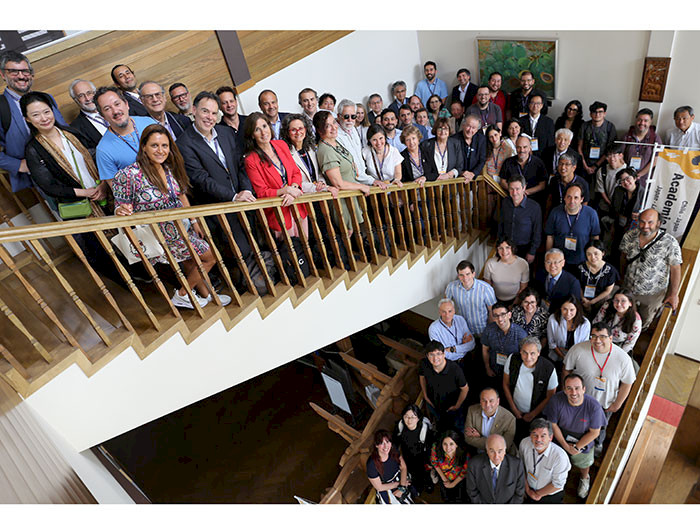
photo_camera The event gathered over 60 Chilean representatives and associate organizations, including a delegation of 20 UC Chile academics and authorities. In total, 115 participants from ten different institutions attended. (Photo: Chilean delegation/Chile-Japan Forum).
In Kyoto, the ancient capital of Imperial Japan and current center for Japanese culture and religion, the fifth version of the Chile-Japan Academic Forum took place. Created in 2014, this event has strengthened ties between higher education institutions of both countries, promoting scientific collaboration in key areas of knowledge. Alternating its venue between both nations, this forum has been consolidated as a strategic platform for advancing the internationalization of university research and generating joint solutions to global challenges.
Held from September 29 to October 3, the event was organized by UC Chile, University of Chile, and Universidad de Concepción, along with Tokyo University and this year’s host, Kyoto University, through its Disaster Prevention Research Institute (DPRI). It brought together over 60 Chilean representatives and associate organizations, including a delegation of 20 UC Chile academics and authorities. In total, 115 participants from ten different institutions attended.
Participants attended formal meetings between university presidents and authorities, and took part in workshops that addressed six key research areas: astronomy and astronomical instrumentation; earth sciences; climate change and disaster preparedness; health science and engineering; educational, cultural, and social challenges; ecology; sustainable architecture and urban planning; and quality of life, nutrition, and well-being in old age. Each working group combined scientific and cultural perspectives that opened new possibilities of joint research and technological transfer.
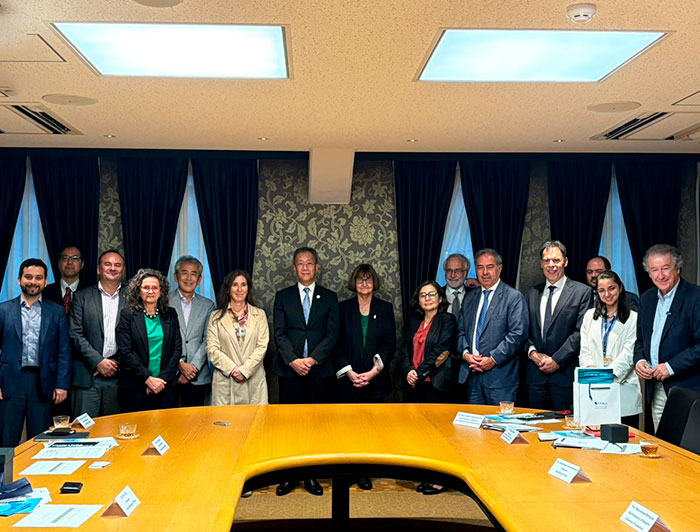
“These forums are a very interesting platform that allows us to bring together academics from both nations to work on common themes and develop long-lasting collaborations,” said UC Chile Vice President for Research, María Angélica Fellenberg.
As part of the forum, the UC Chile delegation actively participated in the workshops and work meetings, with academics addressing topics ranging from healthy aging mechanisms to the design of functional nutrition for elderly people. “What we are looking for with these forums is to strengthen the research bond with academics that work on topics that we can sustain over time,” explains UC Chile President for Research, María Elena Boisier.
Astronomy: An alliance that looks to the sky
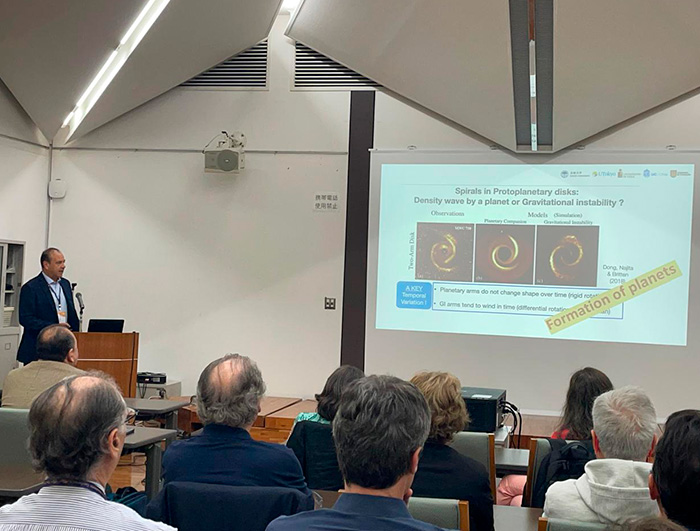
For UC Chile Dean of Physics, Samuel Hevia, the joint work with Japan holds special significance. He said: “astronomy was one of the central topics of the forum. We came away with the conviction that our astronomers are of a very high level, but we need to work on technological development and create virtuous circles that enable its application in our observatories.”
Felipe Barrientos, from the Institute of Astrophysics, added that these meetings “allow the strengthening of existing collaborations, and open new opportunities to work with Japanese laboratories and observatories, which have a strong presence in Chile. Visiting their facilities helps us develop ideas and connect with new actors in the area.”
Health and nutrition: Science for a long life
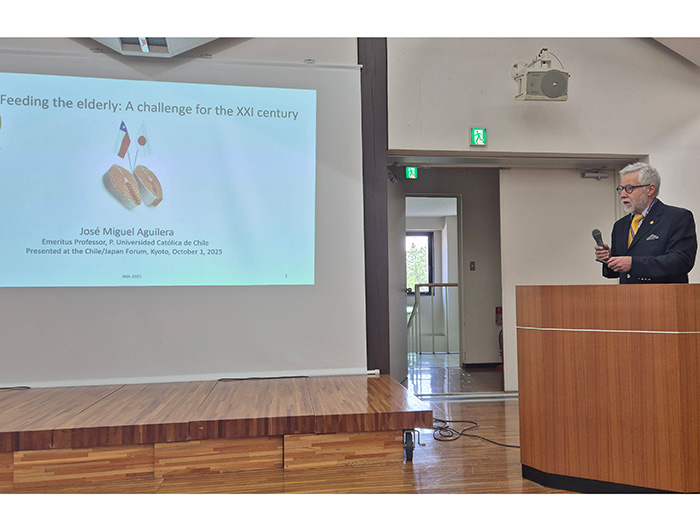
UC Chile led the workshop on quality of life, nutrition, and well-being in elderly people, bringing together researchers from Japan, Chile, and other countries. “This forum achieved something unusual: it gathered experts who are proposing solutions that we will see implemented in five to ten more years, with foods and technologies that will allow us to live better lives,” explains UC Chile emeritus professor and National Science Award winner, José Miguel Aguilera.
UC Chile Engineering Professor, Pedro Bouchon, added that this experience was particularly valuable because of the complementarity between both cultures. “Japan has a very strong tradition of healthy aging. They have both ancestral and contemporary knowledge about living better and longer, and this opens up opportunities to learn and integrate interdisciplinary approaches.”
What did this Academic Forum achieve?
This forum not only strengthened ties with Tokyo University and Kyoto University, but also led to the creation of agreements to continue developing joint projects in applied research. “What we hope,” said Vice President María Angélica Fellenberg, “is that this work continues, that the collaborations born here are sustained over time, and that they evolve into new joint projects and publications.”
For Carlos Ladrix, Head of Applied Research at the National Agency of Development and Research (ANID, as per its acronym in Spanish), the forum is an opportunity to advance toward a deeper scientific cooperation. “There are great opportunities for progress because we have many issues in common with Japan. Although their technological development is outstanding, Chile is producing valuable science with global impact,” he noted. “These spaces help build mutual trust and personal ties that make real collaboration possible.”
For his part, Engineering academic Denis Parra highlighted the interdisciplinary diversity of the event. “It was very rewarding to learn more about areas such as bioengineering or DNA, fields we don’t usually work closely with, but which open new opportunities for applying Artificial Intelligence to health and the biological sciences,” he said.
As María Angélica Fellenberg remarked, “we gained many academic experiences, extremely important ones, because our Japanese counterparts as well as the Chileans have much to contribute to the conversation. In addition, I take with me the personal experience of being immersed in the Japanese culture: their kindness, their order, and cleanliness are admirable.”

Looking toward the future, authorities agreed that the challenge is to keep this two-nation network alive. “Beyond immediate results, what endures is the collaborative spirit that drives us to work together,” Boisier reflected. The next forum is already shaping up to be a new opportunity to deepen the academic alliance that continues to grow between the two countries.
The Fifth Chile-Japan Academic Forum closed by reinforcing the importance of maintaining these spaces as bridges between cultures and institutions. As the UC Chile Vice President summed up: “Beyond the scientific results, the most valuable thing we take back to Chile is the certainty that shared knowledge can change realities and strengthen ties between countries that look to the future together.”
In addition to the Forum’s main activities, the universities’ authorities held a series of meetings aimed to strengthen institutional ties with Tokyo University and Kyoto University. “We met with their presidents to promote student exchanges and research collaboration. These alliances are key in projecting long-term partnerships,” stated UC Chile President for Research, María Elena Boisier.
For her, the value of these forums lies in their ability to consolidate networks and open new areas of joint work. “Academic forums allow us to expand our global presence and maintain cooperation over time. We take on new friendships that become projects, publications, and mobility between researchers from both countries.”
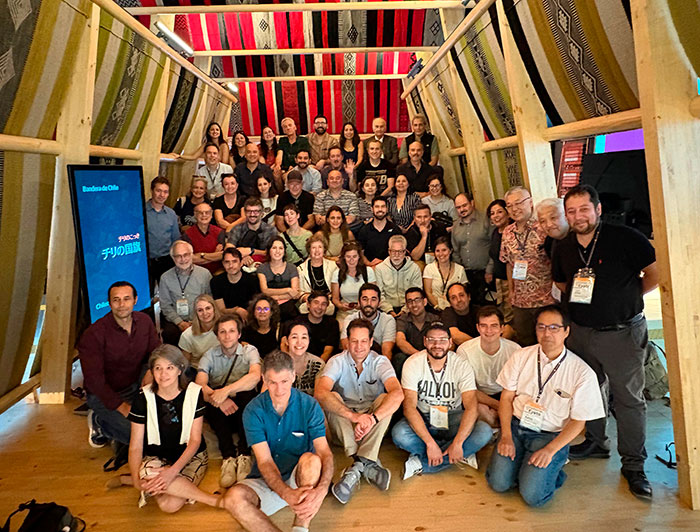
The more than 60 members of the Chilean delegation had the opportunity to visit the Chilean stand at Expo Osaka, together with Japanese attendants, thanks to ProChile, an agency of the Ministry of Foreign Affairs. “We are very proud to welcome this delegation, which showcases the best of our country to the world,” commented María Juñes, director of the stand, who highlighted the high turnout and the enthusiasm of the visitors.
The tour included a presentation of scientific and cultural projects that reflect the collaborative spirit of the forum. “This is a space for visibility and connectivity, where academia plays an essential role in showcasing the innovation and talent coming from Chile,” added María Juñes.


